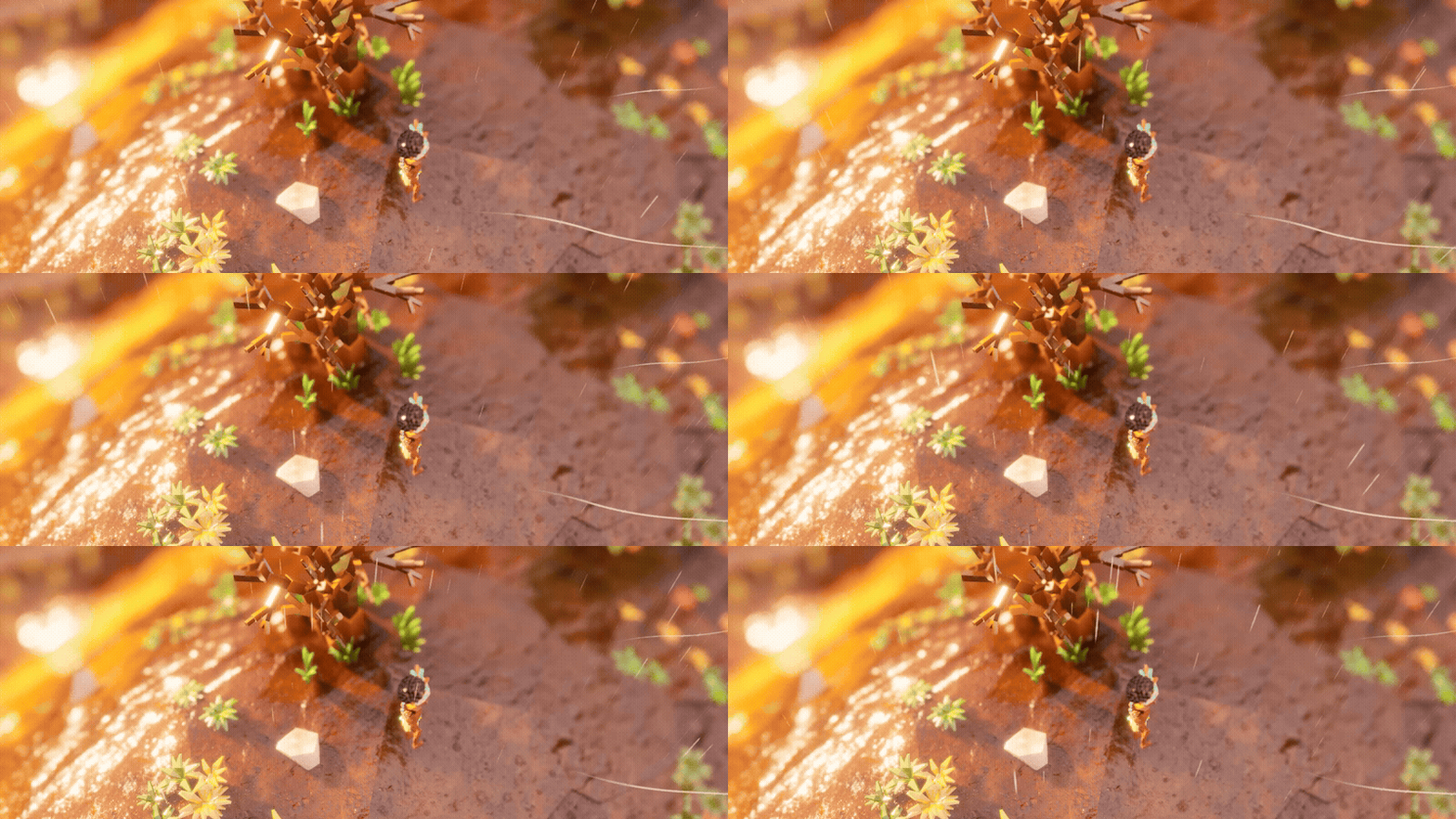
This shader code samples a texture and applies a time-based masking effect to the sampled color. The mask is created using a combination of fractional and sine functions, influenced by the texture’s alpha and red channels. Output color is than masked with mat-collections rain attribute and applied to normal of the shader.

Functionality:
textureSample: This is the input texture sample.maskA: This value is calculated using the fractional part of the sum of the texture’s alpha channel (texColor.w) and a time-based value. Thefracfunction ensures the value stays between 0 and 1, creating a looping effect.maskB: This mask is created by applying a sine function to a clamped value. The clamped value is derived from adjustingmaskAand the red channel of the texture (texColor.r), scaled by 10 and then clamped between 0 and 3. The result is then multiplied by 6 before applying the sine function.maskCombined: CombinesmaskAandmaskBusing a simple multiplication.outColor: This is the output color, initially set to the sampled texture color. It is then multiplied by the combined mask and scaled by 2.outColor.z: The blue channel is explicitly set to 1.return float4(outColor, texColor.a): Returns the final color, ensuring it includes the original alpha value fromtexColor.
float4 texColor = textureSample; // Sampled texture color

// Calculate a time-based mask value using frac and time variables
float maskA = frac(texColor.w + (time * speed));

// Apply a sine function on a clamped value to create a mask effect
float maskB = sin(clamp(((maskA - 1 + texColor.r) * 10), 0, 3) * 6);

// Combine the masks to get the final mask value
float maskCombined = maskB * (1 - maskA);

// Modify the output color using the combined mask and scale it
float3 outColor = texColor.rgb * maskCombined * 2;

// Set the blue channel to 1
outColor.z = 1.0;

// Return the final color
return float4(outColor, texColor.a);
 Ceyhan Kapusuz